Every November 14th, drivers and passengers across the country come together to recognize National Seatbelt Day, a reminder that one simple click can make the difference between life and death. Introduced to raise awareness about the importance of buckling up, this day serves as both a celebration of progress in vehicle safety and a call to action for continued vigilance on the road.
Seatbelts are more than just a legal requirement; they are a proven lifesaving device. According to the National Highway Traffic Safety Administration (NHTSA), seatbelts reduce the risk of fatal injury to front-seat passengers by 45%, and by 60% in pickup trucks, SUVs, and vans. Despite this, millions of Americans still travel without buckling up every day. National Seatbelt Day reminds us that safety begins with a single decision. Whether you are driving to work, running errands, or heading out on a long road trip, every click counts.
The History of National Seatbelt Day
National Seatbelt Day was established in 2019 by Honda and the Governors Highway Safety Association (GHSA) to celebrate the introduction of the modern seatbelt in the late 1950s. The first retractable seatbelt design became standard in American vehicles after Congress passed legislation in 1968, requiring all passenger cars to include them.
Since then, seatbelts have become a universal symbol of safety. Yet, decades later, public awareness still needs reinforcement. National Seatbelt Day reminds Americans that no matter how advanced our cars become, wearing a seatbelt remains one of the most effective ways to prevent injury and death on the road. Over the years, schools, police departments, and organizations have hosted awareness campaigns and social media challenges encouraging everyone to share why they “Click It Every Trip.”
Table of Contents
- The History of National Seatbelt Day
- Why Seatbelts Are a Lifesaving Habit
- Common Myths About Seatbelt Use Debunked
- Seatbelt Laws Across the United States
- Seatbelt Safety for Children and Teens
- The Role of Modern Vehicle Technology in Seatbelt Safety
- How to Properly Wear a Seatbelt
- The Dangers of Driving Unbelted
- Encouraging Seatbelt Awareness in Your Community
- Every Click Counts: How You Can Make a Difference
Why Seatbelts Are a Lifesaving Habit
Seatbelts are designed to distribute the forces of a crash across the strongest parts of the body such as the chest, shoulders, and pelvis while keeping passengers securely in place. Without a seatbelt, even a minor collision can result in being thrown forward or ejected from the vehicle, often with catastrophic consequences.
The NHTSA reports that in a single year, over 15,000 lives are saved by seatbelts in the United States alone. Unfortunately, an estimated 2,500 deaths could have been prevented if everyone had buckled up. Beyond protection, wearing a seatbelt also reduces secondary injuries by preventing occupants from striking the dashboard, steering wheel, or other passengers. Simply put, the seatbelt is your first line of defense, and it is always on duty.
Common Myths About Seatbelt Use Debunked
Despite decades of public safety campaigns, several myths still discourage consistent seatbelt use.
- “Seatbelts trap you in a crash.” False. Seatbelts keep you from being thrown out of the car.
- “I am just driving a short distance.” Most fatal crashes happen within 25 miles of home.
- “I don’t need a seatbelt in the back seat.” Unbelted rear passengers can become deadly projectiles, injuring others in the vehicle.
These myths have cost lives for decades. Education and awareness are the best tools to ensure everyone understands the truth that seatbelts are designed to protect, not restrict.

Seatbelt Laws Across the United States
Every U.S. state except New Hampshire has seatbelt laws, but not all states enforce them the same way. Primary enforcement laws allow officers to ticket a driver or passenger solely for not wearing a seatbelt. Secondary enforcement laws mean an officer can only issue a seatbelt citation if another traffic offense occurs first.
Studies show that states with primary enforcement laws have seatbelt usage rates nearly 10% higher than those with secondary enforcement. These laws save thousands of lives each year by encouraging consistent seatbelt use. In Florida, for example, not wearing a seatbelt is a primary offense, with fines and points applied to your driving record. The message is clear: safety is not optional.
Seatbelt Safety for Children and Teens
Proper seatbelt and car seat use for young passengers is crucial. Children under 13 years old should always ride in the back seat, properly restrained in a booster or car seat that fits their size and weight. For infants and toddlers, rear-facing seats provide the best protection until they exceed height or weight limits.
Teens are statistically among the least likely to wear seatbelts. Peer influence, overconfidence, and inexperience contribute to this risk. Parents can play a powerful role by modeling consistent seatbelt use and setting clear rules before handing over the car keys. Encouraging seatbelt awareness early builds lifelong habits and promotes responsible driving behavior.
The Role of Modern Vehicle Technology in Seatbelt Safety
Modern cars are packed with technology designed to enhance seatbelt effectiveness. Features like pretensioners automatically tighten seatbelts during sudden braking or impact, securing occupants in place milliseconds before airbags deploy.
Load limiters prevent the belt from exerting too much force on the chest, reducing the risk of rib or collarbone injuries. Meanwhile, seatbelt reminders, now required in most vehicles, use lights and sounds to alert drivers and passengers if a belt is not fastened. As automakers continue developing smarter safety systems, these innovations complement but never replace the need for personal responsibility.
How to Properly Wear a Seatbelt
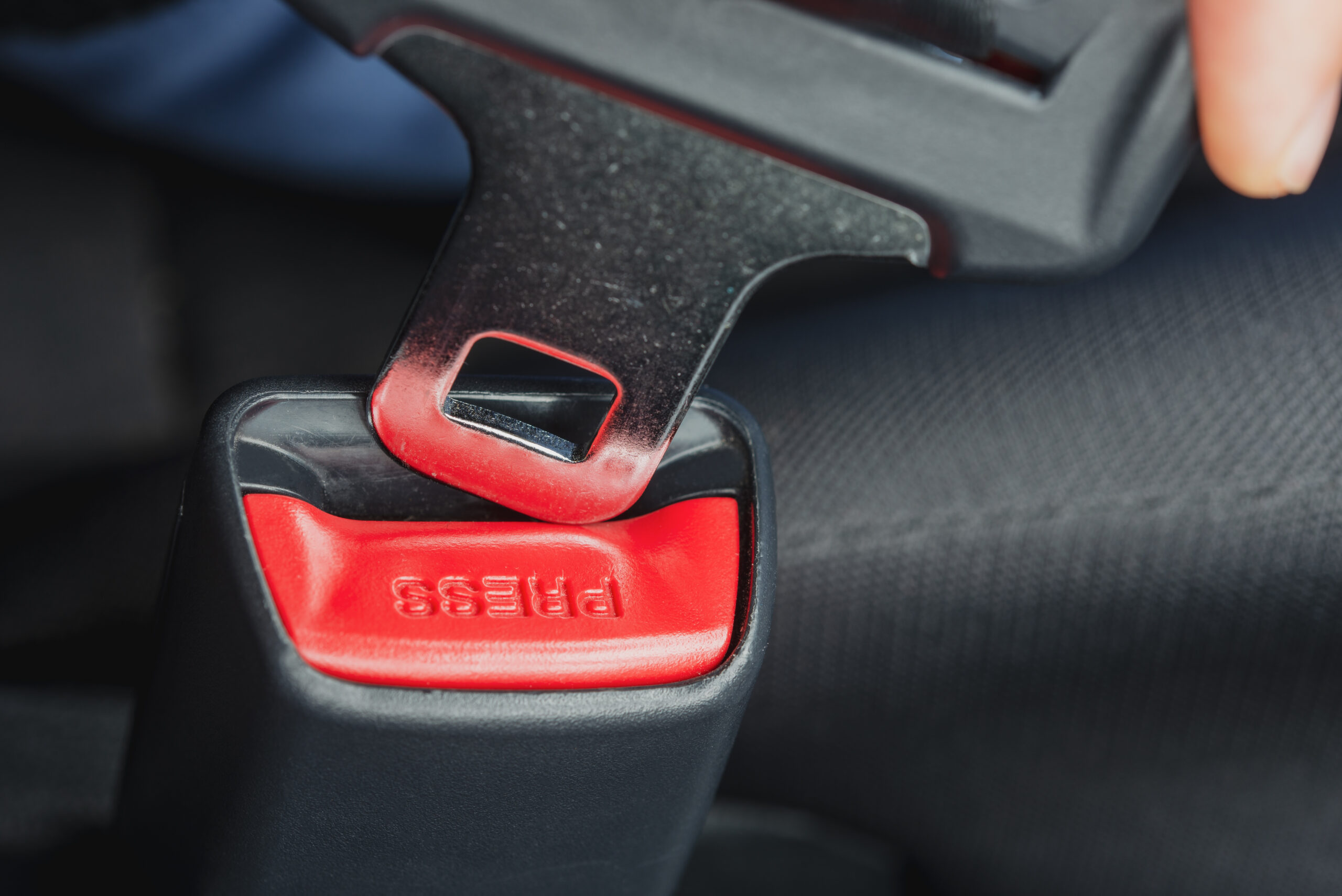
Knowing how to wear a seatbelt correctly ensures maximum protection. Follow these key steps:
- Position the lap belt snugly across your hips, not your stomach.
- Make sure the shoulder belt crosses the middle of your chest and shoulder, not your neck or face.
- Never tuck the shoulder belt behind your back or under your arm.
- Adjust your seat to sit upright since slouching can reduce the seatbelt’s effectiveness.
A properly fitted seatbelt works in harmony with airbags and other safety features to keep you secure during sudden stops or collisions.
The Dangers of Driving Unbelted
Driving without a seatbelt dramatically increases your risk of serious injury or death. In a crash at just 30 mph, an unbelted person can be thrown with the same force as falling from a three-story building.
Ejection from a vehicle almost always results in severe injury or fatality. According to the Centers for Disease Control and Prevention (CDC), more than 75% of people ejected during crashes die from their injuries. Beyond physical harm, being unbelted can also lead to financial and emotional consequences, from medical bills and insurance rate increases to the lasting trauma of losing a loved one. The choice to buckle up protects not only you but everyone who cares about you.
Encouraging Seatbelt Awareness in Your Community
National Seatbelt Day provides a perfect opportunity to take action in your community. Schools can organize student safety assemblies, while local businesses can host “Buckle Up” campaigns with giveaways or car seat checks.
Law enforcement agencies often partner with safety coalitions to share seatbelt facts and enforcement reminders. Social media also plays a big role, since a simple post encouraging friends to wear seatbelts can inspire others to follow suit. When entire communities work together, seatbelt usage rates rise, accidents decline, and more lives are saved. Every reminder matters.
Every Click Counts: How You Can Make a Difference

Seatbelt safety begins with small, consistent choices. Make a commitment to:
- Always buckle up, no matter the distance.
- Ensure all passengers are secured before driving.
- Talk to family and friends about why you wear your seatbelt.
- Support local awareness events or volunteer at safety organizations.
These simple actions can create ripple effects of safety across your circle and community. Remember that every click counts.
National Seatbelt Day is more than just a date on the calendar. It is a moment to reflect, educate, and take responsibility. Decades of data and countless stories show that seatbelts save lives every single day. They are the simplest, most effective protection you have in a vehicle.
As we honor this important day, let’s spread the message beyond social media hashtags and into real-life action. Whether you are teaching a child to buckle up, reminding a friend to fasten their belt, or leading a community campaign, your voice can save lives. On National Seatbelt Day and every day after, remember to buckle up because safety is always worth it.

Lauren Pineda is the Firm Administrator at Trelles Injury Law, responsible for overseeing marketing, client relations, and administrative functions. Fluent in both English and Spanish, she began her career with the firm in 2016 as a Receptionist, later advancing to Legal Assistant, and ultimately to Firm Administrator in 2020. Lauren has been a Notary Public since 2015. She is an active member of the Association of Legal Administrators (ALA) and will serve as Secretary of the Palm Beach County Chapter (PBCALA) for the 2025-2026 term. She was also honored with the PBCALA Outstanding Volunteer Award for the 2023-2024 term.
Related Post


Free Consultation Form
We have vast experience in every type of accident case.
Give Us the details, and we will tell you how we can help.